Physical Address
304 North Cardinal St.
Dorchester Center, MA 02124
Physical Address
304 North Cardinal St.
Dorchester Center, MA 02124
5,000 cheeses on 12–15 November, the Los Pedroches jamón fair on the 5th–8th, and the one Andalusian capital whose rainfall falls from October to November.
Córdoba in November 2026 has something it will not have again: the World Cheese Awards. Five thousand cheeses and around three hundred judges land at the city’s exhibition centre on 12 November, and four days before that the Los Pedroches valley holds its twenty-sixth acorn-fed ham fair. One November week, the two biggest food events the province has ever staged.
The ordinary case for Córdoba in November is good too, and it rests on a small statistical oddity: this is the only provincial capital in Andalucía that gets drier going from October into November. Everywhere else gains rain. Córdoba loses six millimetres.
Córdoba airport averages 19.1°C by day and 7.8°C at night in November, with 80mm of rain across 5.9 rain days, 0.6 frost days and 0.7 thunderstorm days. Those are AEMET’s 1981–2010 normals.
October gives Córdoba 86mm across 6.9 days; November gives 80mm across 5.9. It is a small shift but it runs against the regional pattern — Málaga gains 43mm over the same step, Cádiz 31mm, Seville 23mm. If you are choosing an inland Andalusian city for a November trip on rainfall grounds, Córdoba is the one.
The nights are the catch. 7.8°C is the second-coldest capital minimum in the region after Granada’s, with frost on roughly one night in a November. This is the Guadalquivir basin doing what basins do: it holds the summer heat brutally and sheds it fast. The city that hits 45°C in July needs a jacket by eight in the evening in November.
The tail risk is real. Córdoba’s wettest single November day on record is 154mm — nearly twice the entire monthly average — on 2 November 1997, the same month the station recorded 21 rain days, as did Seville, Granada and Jaén. Most Novembers are nothing like that.
The second week, and it is not close. The jamón fair runs 5–8 November at Villanueva de Córdoba and the World Cheese Awards 12–15 November in the city, making 5–15 November the densest food fortnight in the province’s calendar.
Book accommodation early for the cheese awards. Three hundred international judges and a trade festival will take a meaningful share of the city’s beds, and Córdoba is not a big hotel market. The All Saints long weekend — Saturday 31 October to Monday 2 November, the holiday moving to the Monday because the 1st is a Sunday — is busy with Spanish visitors but short.
Three things get misplaced into a Córdoba November.
The Cata del Vino Montilla-Moriles is in April, not November — the 40th edition runs 23–26 April. There is no November wine festival in Córdoba city.
The vendimia is long finished. Montilla-Moriles began its 2026 harvest on 24 July, which the regulatory council itself describes as one of the earliest in continental Europe. The Pedro Ximénez asoleo — sun-drying the grapes on esparto mats — follows in August. By November the cellars are in élevage, not harvest.
The patios are out of season. The Festival de los Patios is in May, and the Christmas patios programme ran 5–28 December in 2025. November falls between the two.
We have also left out mushroom foraging in the Sierra de Hornachuelos, which circulates as a November activity. We could not find a Junta or park source on seasons or permits, and we are not sending you into a natural park on the strength of a travel listing.
November is the month Córdoba province eats what it has just made. In the Subbética — Priego, Baena, Cabra, Luque — the olive harvest is in full swing. The protected-origin council for Priego de Córdoba sets it out variety by variety on its own site: hojiblanca and picuda start coming in around October, picual from November, and certified oils are milled from the second half of October to the first half of January. The result is aceite de recolección temprana, early-harvest oil, and it is at its most aggressive and most interesting right now.
In the north, the Los Pedroches dehesa is at full montanera. Spanish law requires acorn-fed pigs into the oak woods between 1 October and 15 December, with a minimum weight gain of 46 kilos over more than sixty days, and forbids slaughter before 15 December. So the fair on 5–8 November is a fair about animals that are all still out in the woods, which is a slightly strange and very honest thing.
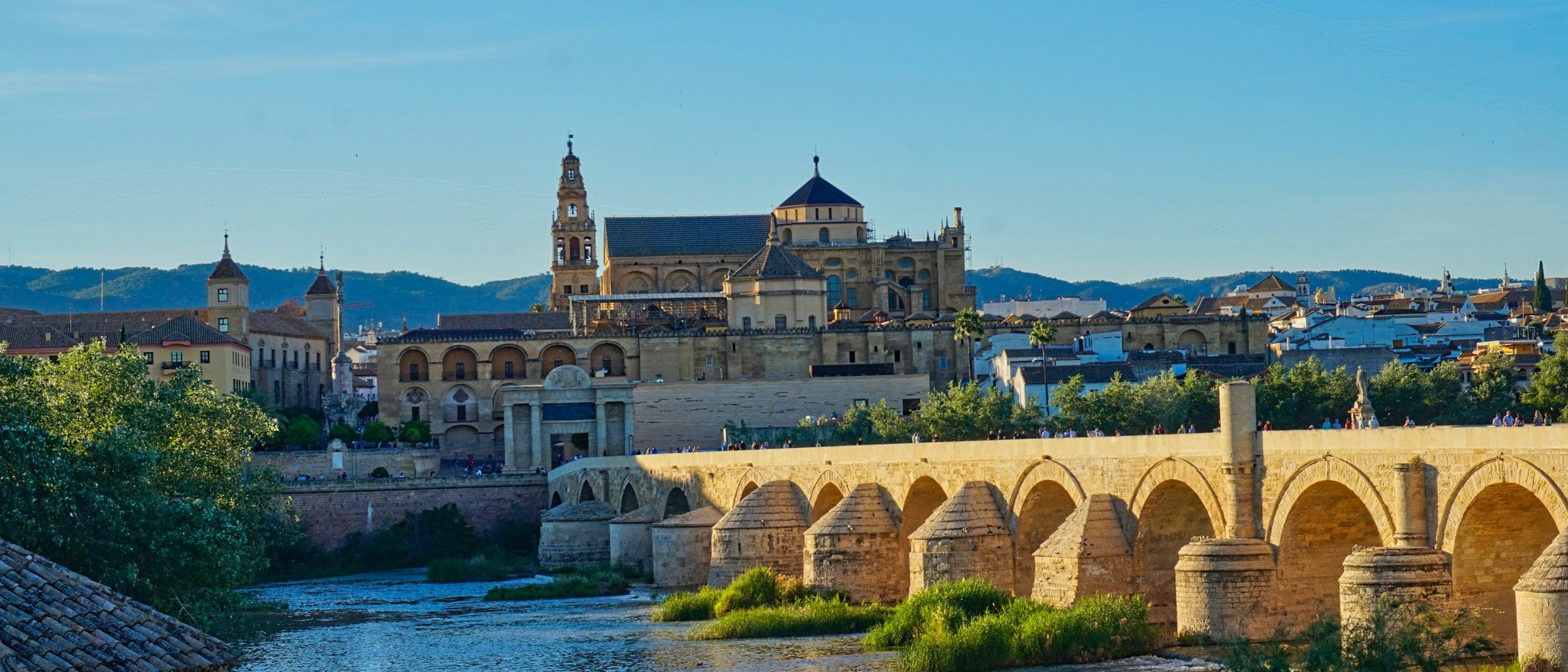
In Montilla the bodegas are quiet in the good way: you can visit without walking into harvest chaos, and the town has been named Spanish Wine City for 2027, so expect the programme to build. And the city is doing the thing it cannot do in May or August — the Mezquita and the Judería without heat and without the patio-season crush.
In most months the honest answer for Córdoba is the city, because the Mezquita is the reason people come and the province is a long way across. November is the exception: the cheese awards in the city, the jamón fair ninety minutes north in Los Pedroches, the oil mills an hour south in the Subbética. With two or three days, stay in the city and take one day out. With five, the north and the south of this province are genuinely different places, and November is the month they are both working.
In any ordinary year, taste the new oil in the Subbética — picual and hojiblanca milled within hours of picking, bitter and peppery in a way it will not be by February, poured in the co-ops at Priego and Baena while the harvest is still coming in.
In 2026, go to the World Cheese Awards. Five thousand cheeses and three hundred judges in one hall is not a thing Córdoba stages — it is a travelling event and it will not be back soon. It sits four days after the Los Pedroches jamón fair, in a province that is simultaneously milling its first oil and running a full montanera. That is an unrepeatable November week and it would be odd to advise anything else.
Yes, and better than its reputation. Nineteen degrees by day, the lowest rainfall step in the region, the Mezquita without summer crowds, and in 2026 an exceptional food calendar. The nights are cold for Andalucía and there is a chance of frost.
Yes, and it is a good month for it — the harvest finished in July and August, so visits are unhurried. You will see ageing and the solera system rather than crushing or sun-drying.
Almost certainly not. Córdoba’s switch-on has recently been in early December — 2 December in 2025 — even though the wider Christmas programme opens in late November.
Weather: AEMET, Valores climatológicos normales 1981–2010, Córdoba Aeropuerto; extremes from AEMET’s Valores extremos series. World Cheese Awards: the International Cheese Festival and Diputación de Córdoba. Jamón fair: Consejo Regulador DOP Los Pedroches. Piano festival: Festival Internacional de Piano Rafael Orozco. San Martín at Añora: Ayuntamiento de Añora; gachas as inventoried heritage, IAPH Atlas del Patrimonio Inmaterial de Andalucía. Local holidays: BOJA no. 197. Olive harvest timings: Consejo Regulador DOP Priego de Córdoba. Vendimia dates and Montilla’s 2027 title: Consejo Regulador Montilla-Moriles. Christmas and patios programmes: Turismo de Córdoba. Montanera rules: Real Decreto 4/2014, article 6.